ᎦᏬᏂᎯᏍᎩ: ᎾᎯᏳ ᏥᎨᏎᏍᏗ Language: By This Time
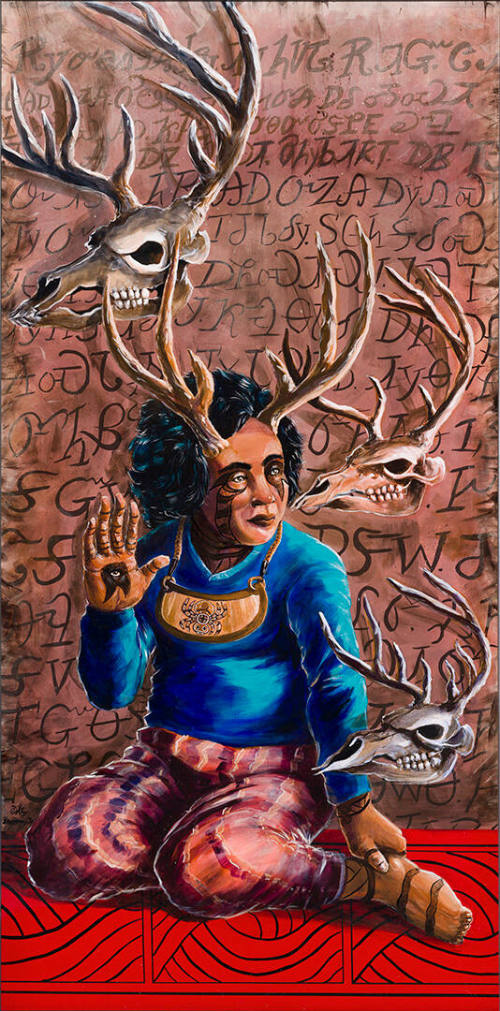
ᎦᏬᏂᎯᏍᎩ: ᎾᎯᏳ ᏥᎨᏎᏍᏗ Language: By This Time
Artist
Roy Boney Jr.
(Cherokee, born 1978)
Date2024
MediumAcrylic and watercolor on board
Dimensions72 × 36 in.
Framed: 77 3/8 × 41 1/2 × 4 1/8 in.
Framed: 77 3/8 × 41 1/2 × 4 1/8 in.
ClassificationsPainting
Credit LineCrystal Bridges Museum of American Art, Bentonville, Arkansas, 2024.76
Signedl.l., in black paint: ᏬᏂᎦ / Roy Boney Jr. / 24
Accession number
2024.76
On View
On viewLabel Text“I grew up in a family of Cherokee speakers. I am deer clan. This painting symbolizes the loss of language and the dimming of culture. It also shows there is hope in bringing it all back. A deer clan child is dressed in contemporary clothing. She holds up her hand with the eye of knowledge embedded in it. This eye symbol is seen in ancient tribal southeastern art and is often interpreted as a search for learning and artistic expression. Behind the child is a fragment of a Cherokee letter telling the story of how Cherokees strayed from their path and fell into darkness. The deer skulls in the painting represent this darkness. They are oriented westward towards the setting sun. The spider emblem the child is wearing on her chest depicts the water spider in Cherokee stories that brought light to the world, representing hope for the future.” —Roy Boney Jr.
“Crecí en una familia en la que se hablaba cherokee. Pertenezco al clan del ciervo. Este cuadro simboliza la pérdida de la lengua y el desvanecimiento de la cultura. También muestra que hay esperanza de que todo se puede recuperar. Una niña del clan ciervo viste ropa contemporánea. Levanta la mano con el ojo del conocimiento incrustado en ella. Este símbolo del ojo aparece en el antiguo arte tribal del sureste y suele interpretarse como una búsqueda de aprendizaje y expresión artística. Detrás de la niña hay un fragmento de una carta cherokee que cuenta la historia de cómo los cherokee se desviaron de su camino y cayeron en la oscuridad. Los cráneos de ciervo del cuadro representan esa oscuridad, y están orientados hacia el oeste, hacia la puesta de sol. El emblema de araña que la niña lleva en el pecho representa a la araña del agua de las historias cherokee que trajo la luz al mundo como símbolo de la esperanza en el futuro”. —Roy Boney Jr
“ᎠᏆᏛᏒ ᏏᏓᏁᎸ ᎾᏍᎩ ᏣᎳᎩ ᎠᏂᏬᏂᏍᎩ ᎨᏒᎢ. ᎠᏂᎧᏫ ᏗᎩᏴᏫ. ᎯᎠ ᎠᏑᏫᏓ ᏗᏟᎶᏍᏔᏅᎢ ᏥᎩ ᏓᏟᎶᏍᏗᎭ ᎾᏍᎩ ᎢᎩᏲᏎᎲ ᎦᏬᏂᎯᏍᏗ ᎠᎴ ᎠᏍᎪᎸᎬ ᎢᎦᏛᏁᎵᏓᏍᏗ ᎢᎩᎲᎢ. ᎠᎴᏗᏍᏊ ᎬᏂᎨᏒ ᏂᎦᎵᏍᏗ ᎤᏚᎩ ᎦᎬᏗ ᎨᏒ ᎥᎠᏲᎯᏍᏗ ᏂᎦᏓ ᎾᏍᎩ. ᎠᏂᎧᏫ ᏧᏴᏫ ᎠᏲᏟ ᏚᏄᏭ ᏃᏊ ᏥᏚᎾᏄᏬᎢ ᏗᏂᏲᏟ ᎢᏳᏍᏗ. ᎤᏌᎳᏓᏅ ᎤᏬᏰᏂ ᎾᎿᏃ ᎠᏰᏟ ᎤᏬᏱᏂ ᎠᎧᏔ ᎤᏓᏴᎳᏘ ᎠᎦᏙᎲᏍᏗ ᎢᎩ. ᎯᎠ ᎠᎦᏙᎵ ᏓᏟᎶᏍᏙ ᎠᎪᏩᏛᏗ ᎾᎿ ᎢᎴᎯᏳ ᏥᎨᏎ ᎠᏂᎳᏍᏓᎸ ᎤᎦᎾᏮ ᎧᎸᎬ ᎢᏗᏢ ᎠᏁᎯ ᏧᎾᏟᎶᏍᏔᏅᏅ ᎠᎴ ᎤᎪᏛ ᎠᎾᏁᎶᏗᏍᎪ ᎾᏍᎩ ᎤᏲᎲ ᎧᏃᎮᎭ ᎾᏍᎩ ᎠᏂᏣᎳᎩ ᎤᎾᏞᏒ ᎦᏅᏅ ᎠᎴ ᏫᏚᏂᏅᏨ ᎤᎵᏏᎬᎢ. ᎾᏍᎩ ᎠᎭᏫ ᎤᏍᎦ ᏥᏓᏟᎶᏍᏗ ᎧᏃᎮᎭ ᎯᎠ ᎤᎵᏏᎦ. ᎾᏍᎩᏃ ᏫᏗᎨᏥᎧᏁ ᎤᏕᎵᎬᎢ ᏫᏚᏳᎪᏛ ᏅᏓ ᏭᏕᎵᎬ ᎢᏗᏢ. ᎾᎿᏃ ᎧᎾᏁᏍᎩ ᏥᏓᏟᎶᏍᏗ ᎠᏲᏟ ᎤᏄᏮ ᎦᏁᏥ ᏓᏟᎶᏍᏓ ᎠᎹᏱ ᎡᎯ ᎧᎾᏁᏍᎩ ᎾᏍᎩ ᏥᎧᏃᎮ ᎠᏂᏣᎳᎩ ᎤᏂᏃᎮᏗ ᏧᏲᏞ ᎠᏥᎳ ᎠᏨᏍᏙᏗ ᎾᎿ ᎡᎶᎯ ᏂᏚᏛᏁᎸ ᎤᏚᎩ ᎨᎬᏗ ᏫᏓᎢᏒᎢ. —ᎧᏂᎦ ᎪᎳᎭ (ᏣᎳᎩᎯ ᎠᏰᎵ)